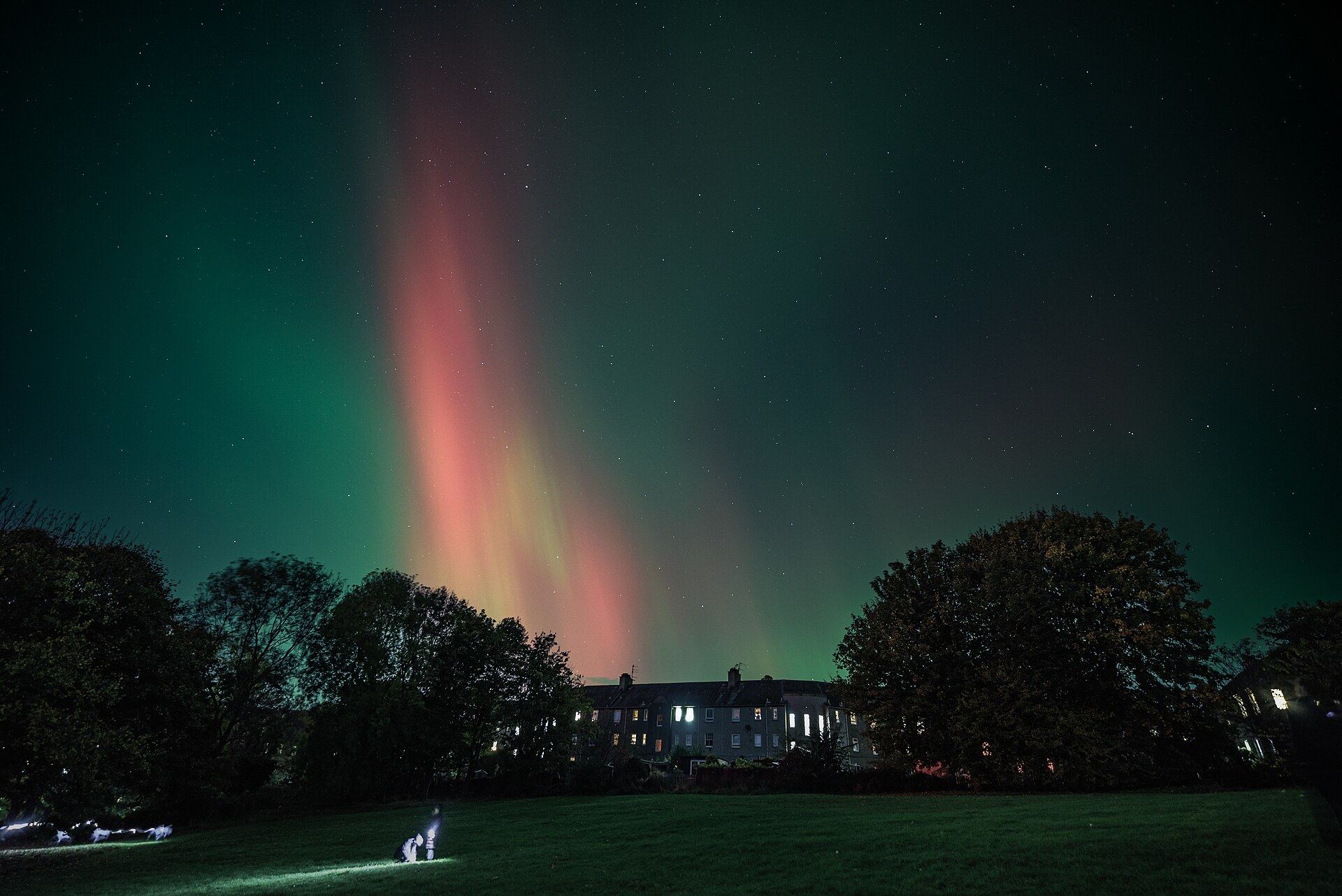
Northern Lights Escapes covers where, when and how to read the odds for the aurora. Our travel team at The JLT Group plans and books your trip.
Can you see the northern lights from the UK?
Sometimes, yes. Not often, and not from everywhere.
NOAA, the US space-weather agency, puts the best viewing under an oval between about 60 and 75 degrees north. There, it says, the aurora can show on more than half the nights of a year. Most of the UK lies south of 60 degrees north.
During large events it reaches further. NOAA says the aurora can then be seen as far south as the US, Europe and Asia. The Met Office says displays are sometimes seen as far south as Scotland and northern England. That needs a clear night with no cloud.
60 to 75 degrees north
How strong does the storm need to be?
Stronger than most nights bring. Storms are rated by the Kp number, a scale from 0 to 9. The Met Office gives two rules of thumb:
- Kp 6 to 7. The aurora often moves southwards across southern Iceland or towards the Faroes. It can be faintly visible from the UK.
- Kp 8 to 9 and above. The aurora belt can sit directly over the UK. The Met Office calls that a rare occurrence.
Kp 6 to 7
NOAA turns Kp into storm levels. Kp 5 is a G1 storm, Kp 6 is G2, Kp 7 is G3, Kp 8 is G4 and Kp 9 is G5. It counts how often they happen across an 11-year solar cycle. That is about 360 days of G2, 130 of G3, 60 of G4 and 4 of G5.
Those are days when a storm of that size happens somewhere, not days you could see it from home. You still need darkness and a clear sky.
Where should you look in the North East?
North, and away from town lights. The Met Office says the best chance of seeing the aurora remains in the north of the UK. It also says light pollution plays a significant part. Northumberland, County Durham and Tyne and Wear sit in northern England, which is the part of the UK the Met Office names.
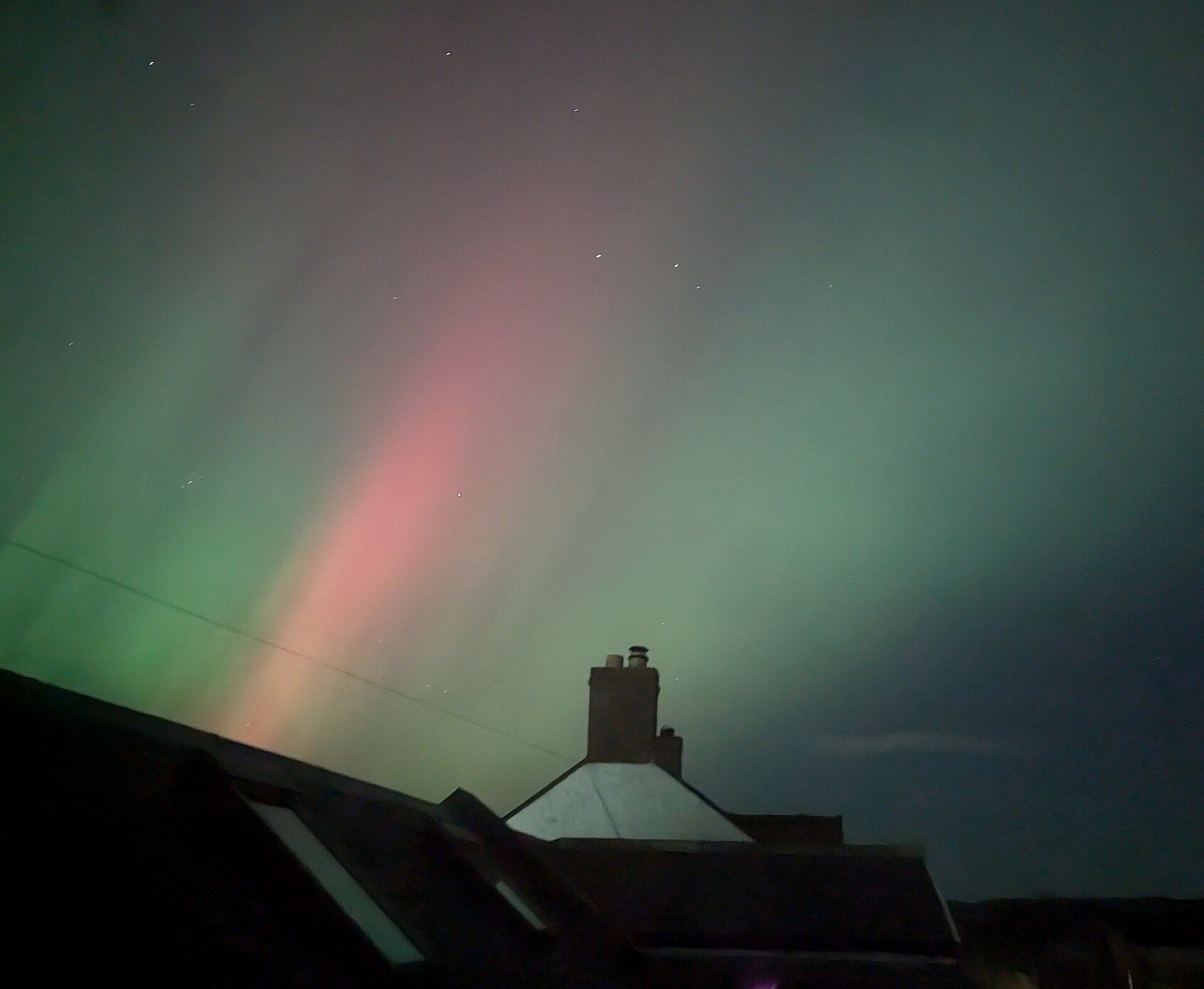
Here is the reason a low, open view to the north matters. NOAA says the aurora does not have to be overhead. It can be seen from up to about 1,000 km away when it is bright and conditions are right. So pick a dark spot with nothing in the way to the north. That is our advice, not NOAA's.
What do travellers talk about? In one UK-based set of 2,128 posts, from January 2025 to 20 October 2026, 1,090 were people sharing or announcing sightings. In the same set, 517 were about forecasts. The places named most often were Northumberland (327 posts), Scotland (159), County Durham (148), North Yorkshire (106) and Tyne and Wear (102). These are published trip questions and reports we analysed. They show where people post from. They do not show where the lights are strongest, or how often they show.
1,090 of 2,128
What will it look like?
Paler than the photos. The Met Office says the aurora is often portrayed much brighter in pictures than it appears to the naked eye. A long camera exposure gathers more light than your eye can.
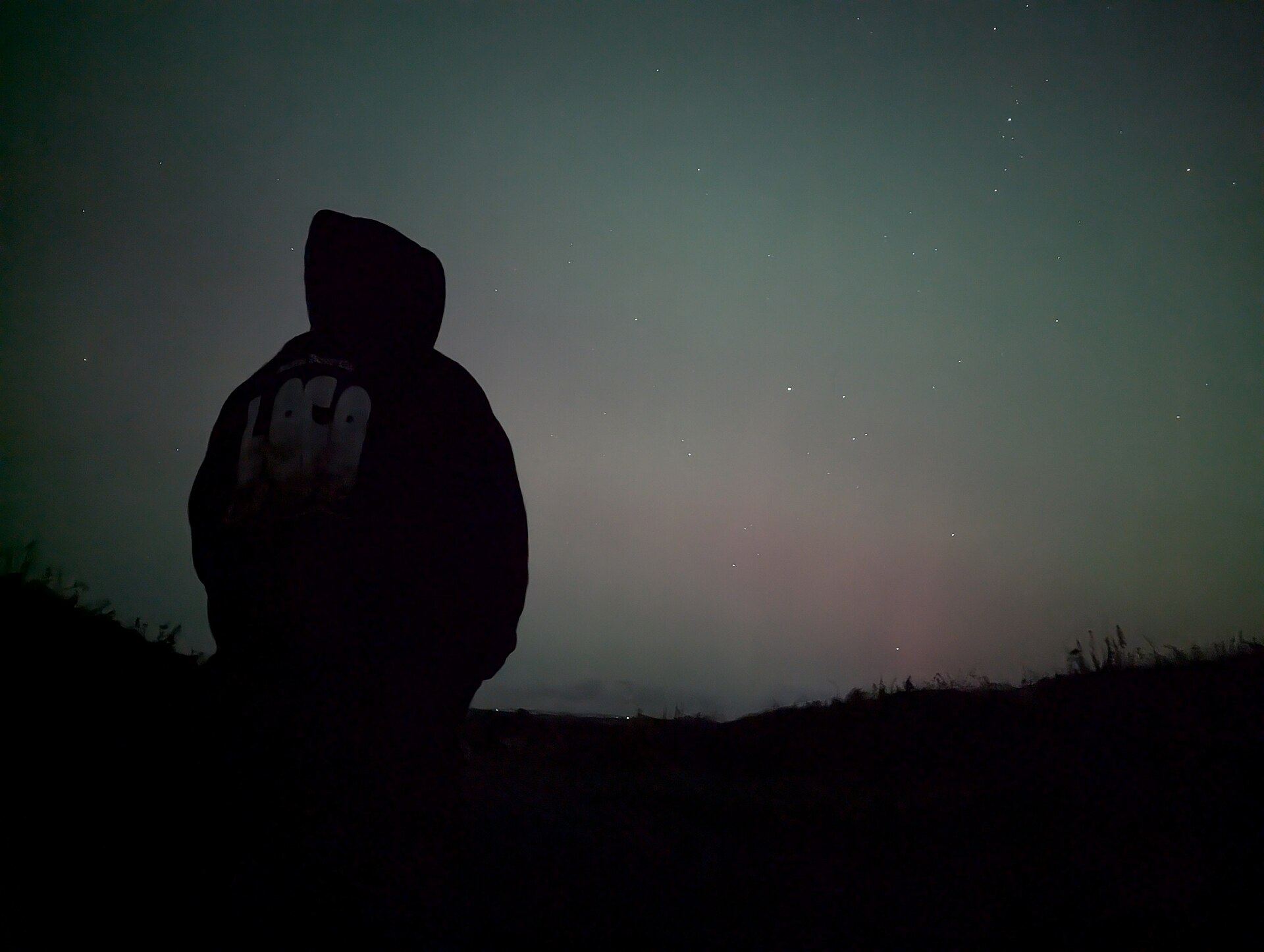
So do not judge a night by other people's pictures. A faint display is still a display.
How do you know when to look?
Check cloud first, then the Kp number. Our page on how to read a forecast explains NOAA's watches, warnings and alerts in plain English. It also covers the 30-minute forecast, which looks only 30 to 90 minutes ahead.
Where do you go for better odds?
North. The Aurora Zone, a tour operator, says travellers inside the main auroral zone do not necessarily need a dramatic Kp reading. It also says its guides can move in search of clearer skies when conditions allow. Those are its own claims.
We have not measured the UK the same way, so we have no like-for-like UK figure. We do have our own record of past winters for two bases inside the oval. At Tromsø, over the last 10 winters, about 7.2 in 10 four-night stays in February had a clear, dark night with the aurora active. At Abisko, over 7 winters, it was about 7.8 in 10. That is a record of the past, not a promise for any trip. The full tables are on our Northern Lights Odds press page.
about 7.2 in 10
Pick your base on where to see the Northern Lights. The two bases above have their own pages: Tromsø and Abisko in Sweden. More than one evening helps, as how many nights explains.
Nobody can promise the lights, at home or away.
Sources, all read on 21 October 2026: NOAA, aurora · NOAA, scales explanation · NOAA, aurora 30-minute forecast · The Aurora Zone, hunting formula · Met Office, auroras · Met Office, how to see the northern lights in the UK, September 2025. Our own odds are past winters of weather and aurora records (Tromsø 2016-17 to 2025-26, Abisko 2019-20 to 2025-26). Traveller counts come from published trip questions and reports we analysed (October 2024 to October 2026, date ranges differ by group, counts only). Contains public sector information licensed under the Open Government Licence v3.0. NOAA and the Met Office do not endorse this guide.